

Accelerated Death Benefits: Which Life Insurance Policies Include Serious Illness Coverage
Accelerated death benefits allow policyholders to access a portion of their life insurance death benefit while still alive if diagnosed with a qualifying serious illness. This feature is available in most permanent life insurance policies, including whole life and indexed universal life, as well as many term life policies. DG Life Group helps Dallas families navigate these options to ensure financial protection during critical health events.
Qualifying Illness Definitions
Accelerated death benefits are not available for every medical condition. Insurers define specific illnesses that qualify for early access to funds. These definitions are standardized across the industry but can vary slightly by carrier.
Critical Illness
Critical illness is a severe, acute condition that requires immediate medical intervention. Common qualifying conditions include heart attack, stroke, and certain types of cancer. The policy typically pays a lump sum upon diagnosis, which can be used for medical bills or living expenses.
Chronic Illness
Terminal Illness
Terminal illness is a condition where a physician certifies that the insured has a life expectancy of 12 months or less. This is the most common form of accelerated benefit, allowing the family to access the majority of the death benefit to cover end-of-life care and estate liquidity.
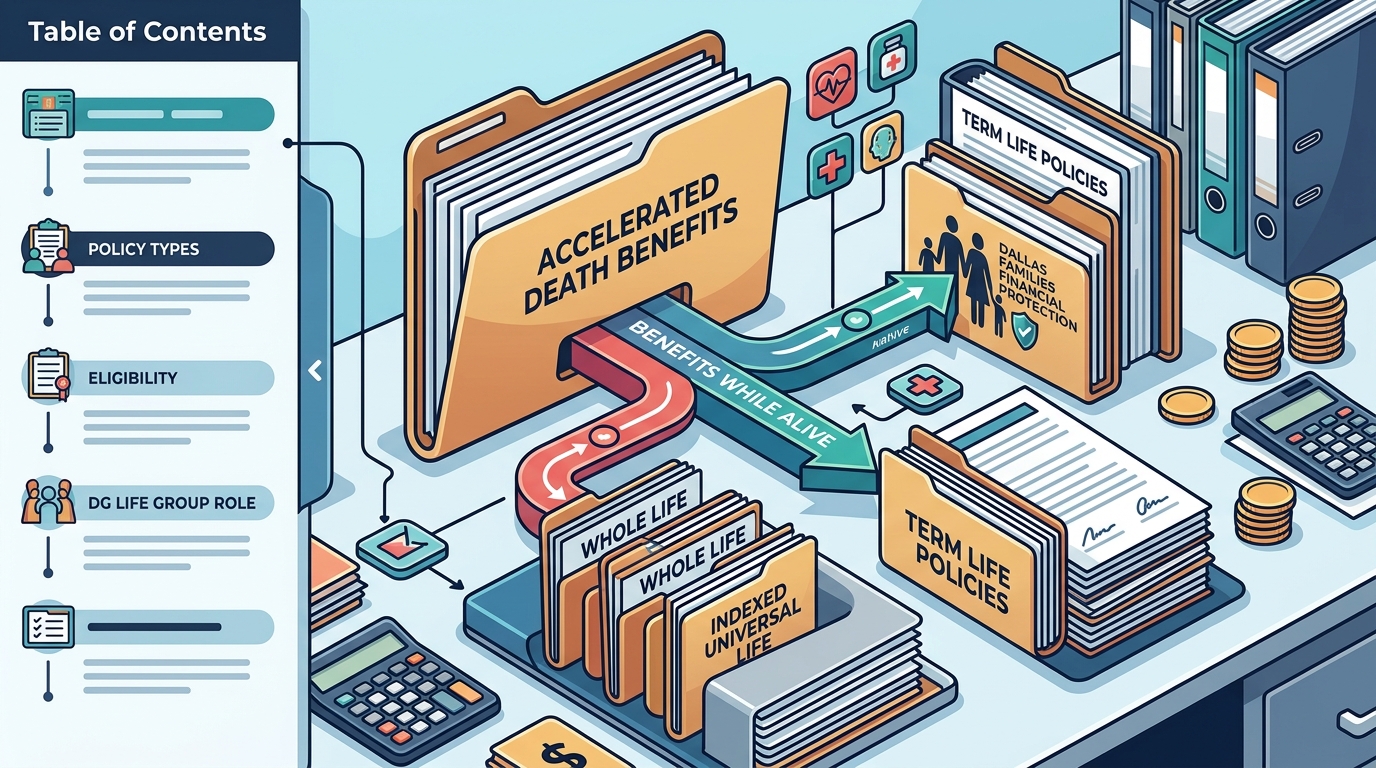
Policy Types That Include Accelerated Benefits
Not all life insurance policies offer the same level of flexibility. The availability of accelerated death benefits depends largely on the type of policy purchased. DG Life Group compares options from over 30 A-rated carriers to find the best fit for your health profile.
Permanent Life Insurance
Permanent life insurance, including whole life and indexed universal life (IUL), is the most common vehicle for accelerated benefits. These policies build cash value over time, and the accelerated benefit is typically paid out of the death benefit. Because these policies are designed to last a lifetime, they are well-suited for covering long-term care or chronic illness costs.
Term Life Insurance
Many modern term life policies also include accelerated death benefit riders. While term policies do not build cash value, the accelerated benefit allows you to access the death benefit if you become terminally ill or chronically ill during the term. This is a cost-effective way to add serious illness protection to a basic term policy.
How Accelerated Benefits Work
Accessing accelerated death benefits involves a specific process that ensures the funds are used appropriately. The process is designed to protect both the policyholder and the insurer.
Application and Certification
To access the benefit, you must submit a claim to your insurance carrier. This requires a certification from a licensed physician confirming the diagnosis and, in the case of terminal illness, the life expectancy. The insurer reviews the claim to ensure it meets the policy's specific definitions.
Payout Structure
The payout structure varies by the type of illness. For terminal illness, the entire remaining death benefit is usually paid in a lump sum. For chronic illness, the benefit is often paid in installments, such as 25% of the death benefit per year, up to a maximum of 75% or 100% of the total benefit. The remaining death benefit is reduced by the amount paid out.
Tax Implications and Financial Impact
One of the most significant advantages of accelerated death benefits is their tax treatment. Understanding the tax implications is crucial for planning your finances during a health crisis.
Federal Tax Exclusion
Under the Accelerated Death Benefits Act, amounts received under a life insurance policy due to the insured's terminal illness are generally excluded from federal income tax. This means you can use the funds for medical care or living expenses without paying income tax on them.
Chronic Illness Tax Rules
For chronic illness, the tax exclusion applies if the insured is certified as chronically ill. However, there are specific rules regarding the amount that can be excluded. If the insured is not chronically ill, the accelerated benefit may be subject to income tax. It is important to consult with a tax professional to understand how these rules apply to your specific situation.
Comparison of Policy Types
The table below summarizes the key differences between policy types regarding accelerated death benefits.
| Policy Type | Accelerated Benefit Availability | Cash Value | Best For |
|---|---|---|---|
| Whole Life | Standard Rider | Yes | Long-term care and legacy planning |
| Indexed Universal Life (IUL) | Standard Rider | Yes | Retirement income and serious illness protection |
| Term Life | Rider (Optional) | No | Affordable serious illness coverage |
Key Takeaways
- Accelerated death benefits allow you to access your life insurance death benefit while alive for qualifying illnesses.
- Qualifying illnesses typically include critical, chronic, and terminal conditions.
- Permanent life insurance policies (whole life and IUL) are the most common carriers of these benefits.
- Many term life policies offer accelerated benefits as an optional rider.
- Funds received for terminal illness are generally excluded from federal income tax.
- Chronic illness benefits are often paid in installments rather than a lump sum.
- Working with an independent broker like DG Life Group ensures you compare options from multiple carriers.
- Always review the specific definitions of qualifying illnesses in your policy contract.
Frequently Asked Questions
What is the most common life insurance policy with accelerated death benefits?
Whole life and indexed universal life policies are the most common types that include accelerated death benefits. These permanent policies are designed to provide lifelong protection and often include riders for critical, chronic, and terminal illness.
Can I get accelerated benefits from a term life policy?
Yes, many term life policies offer accelerated death benefit riders. This allows you to access the death benefit if you become terminally ill or chronically ill during the term of the policy. It is a cost-effective way to add serious illness protection.
Are accelerated death benefits taxable?
Generally, no. Amounts received for terminal illness are excluded from federal income tax. For chronic illness, the exclusion applies if you are certified as chronically ill. However, tax rules can be complex, so it is advisable to consult with a tax professional.
What counts as a qualifying chronic illness?
How much of my death benefit can I access?
For terminal illness, you can usually access the entire remaining death benefit. For chronic illness, the benefit is often paid in installments, up to a maximum of 75% or 100% of the total benefit, depending on the policy terms.
Does DG Life Group offer policies with accelerated benefits?
Yes, DG Life Group works with over 30 A-rated carriers to find policies that include accelerated death benefits. We help you compare options to ensure you have the right coverage for your specific health and financial needs.
Conclusion
Accelerated death benefits are a vital feature of modern life insurance, providing financial security during serious illness. Whether you choose a permanent policy like whole life or an indexed universal life policy, or a term policy with a rider, understanding how these benefits work is essential. DG Life Group is dedicated to helping Dallas families navigate these options with clarity and confidence. To discuss your specific needs and find the right policy, schedule a free call with our team today.