

Pricing Factors: Age and Coverage Amount
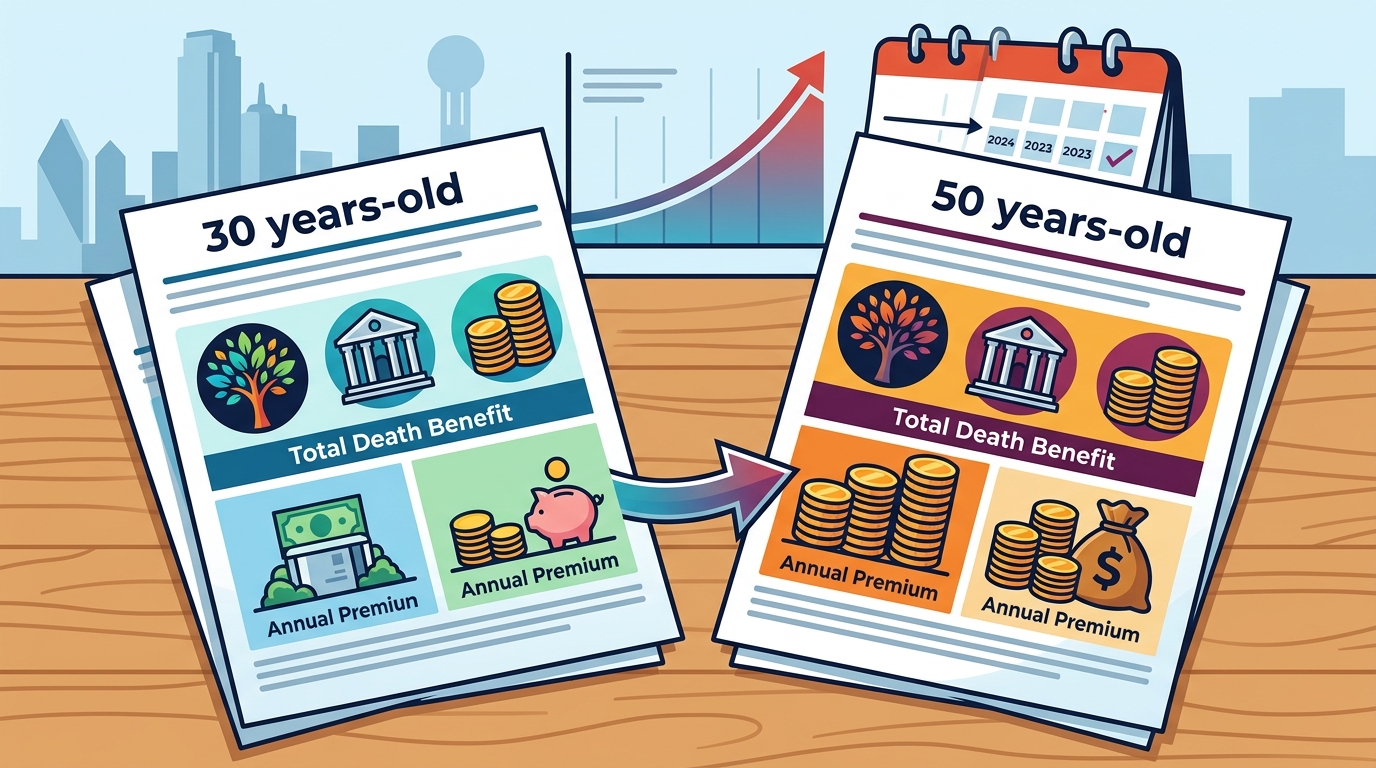
Age is the single most significant driver of whole life insurance premiums. Insurers price policies based on the statistical likelihood of death at a specific age. Because whole life policies last for the insured's entire lifetime, the cost increases sharply as you get older. A 30-year-old will pay significantly less than a 50-year-old for the exact same coverage amount.
Age-Based Premium Estimates
| Age | Gender | Estimated Monthly Premium |
|---|
These estimates assume a level premium structure, where the cost remains fixed for the life of the policy. Some carriers offer increasing premium options, but level premiums are the standard for most whole life contracts. Buying earlier is the most effective way to control long-term costs.
Health Status and Underwriting Classes
Health status determines your underwriting class, which directly impacts your premium. Insurers categorize applicants into tiers such as Preferred Plus, Preferred, Standard, and Substandard. Each tier represents a different risk level and price point. A healthy applicant with no medical history may qualify for the lowest rate class, while those with chronic conditions may pay more.
Whole life insurance requires full underwriting, which includes a medical exam, blood work, and urine tests. This process is more rigorous than simplified issue or guaranteed issue policies. The exam allows carriers to assess your overall health accurately. If you have a history of high blood pressure, diabetes, or heart disease, your premium will likely be higher than the standard rates listed above.
Impact of Common Conditions
Many common health conditions do not disqualify you from coverage, but they do affect the price. For example, a history of high blood pressure that is well-managed with medication may result in a Standard or Preferred rating. However, unmanaged conditions or recent diagnoses can lead to table ratings, which add a percentage to your base premium.
At DG Life Group, we compare your specific health profile against the guidelines of over 30 A-rated carriers. Because each company prices risk differently, the same applicant can receive vastly different quotes from different insurers. One carrier might view a history of asthma as a minor risk, while another might rate it more heavily. This comparison is essential for finding the most affordable whole life policy in Dallas.
Tobacco Use and Premium Impact
Tobacco use is a critical factor in life insurance pricing. Insurers define tobacco use broadly, including cigarettes, cigars, chewing tobacco, and nicotine patches. If you have used any form of tobacco within the last 12 months, you will be classified as a tobacco user. This classification typically doubles or triples your premium compared to a non-tobacco user.
Quitting Smoking and Rate Reduction
Quitting tobacco is the single most effective way to reduce your life insurance costs. The financial savings can be significant over the life of the policy. If you are currently a smoker, consider waiting until you have been tobacco-free for at least a year before applying. This waiting period allows your health markers to improve and ensures you qualify for the lower non-tobacco rate class.
It is important to note that some carriers have stricter definitions of tobacco use than others. For instance, some may consider occasional use of e-cigarettes as tobacco use, while others may not. An independent broker can help identify which carriers are most favorable for your specific usage history. This level of detail is often missed by online quoting tools that assume a standard profile.
Whole Life vs. Term Life Cost Comparison
Many families in Texas consider whole life insurance as part of a broader estate planning strategy. It is important to understand how whole life costs compare to term life insurance. Term life provides coverage for a specific period, such as 20 or 30 years, and is significantly cheaper. Whole life provides coverage for your entire life and builds cash value, which is why it costs more.
| Feature | Whole Life Insurance | Term Life Insurance |
|---|---|---|
| Coverage Duration | Lifetime | 10, 20, or 30 years |
| Cash Value | Yes, builds over time | No |
| Premium Stability | Fixed for life | Increases at renewal |
| Best For | Estate planning, legacy | Income replacement |
Whole life insurance is not just about death benefits. The cash value component grows tax-deferred and can be accessed through policy loans or surrenders. This feature makes whole life a versatile financial tool for high-net-worth individuals in Dallas who are planning for estate liquidity. However, it is not the right choice for everyone. If your primary goal is to replace income for your family during your working years, term life may be a more cost-effective option.
Key Takeaways
- Age is the biggest cost driver; buying whole life insurance earlier significantly reduces long-term premiums.
- Health status determines your underwriting class, with healthy applicants qualifying for the lowest rates.
- Tobacco use can double or triple your premium, so quitting for at least 12 months before applying is crucial.
- Whole life insurance is more expensive than term life but offers lifelong coverage and cash value accumulation.
- Independent brokers can compare rates from multiple carriers to find the best price for your specific health profile.
- Whole life policies are best suited for estate planning and legacy goals rather than simple income replacement.
- Fixed premiums in whole life insurance provide budget stability, unlike term policies that increase at renewal.
Frequently Asked Questions
How much does $500,000 whole life insurance cost in Dallas?
Does whole life insurance build cash value?
Yes, whole life insurance builds cash value over time. This cash value grows tax-deferred and can be borrowed against or surrendered, providing a financial resource during your lifetime.
Is whole life insurance worth it compared to term life?
Whole life is worth it if you need lifelong coverage for estate planning or legacy goals. If you only need coverage for a specific period, such as until your children are independent, term life is more cost-effective.
How does tobacco use affect my whole life insurance rate?
Tobacco use typically doubles or triples your premium. If you have quit, you must wait at least 12 months before applying to qualify for non-tobacco rates.
Can I get whole life insurance with health conditions?
Yes, most health conditions do not disqualify you from coverage. However, they may result in higher premiums. An independent broker can help find carriers that are more favorable for your specific condition.
What is the difference between level and increasing premiums?
Level premiums remain the same for the life of the policy. Increasing premiums start lower but rise over time. Most whole life policies offer level premiums, which provide budget stability.
Conclusion
Understanding the cost of whole life insurance in Dallas requires looking beyond a single quote. Age, health, and tobacco use are the primary factors that determine your premium. By comparing rates from multiple A-rated carriers, you can find a policy that fits your budget and financial goals. DG Life Group provides independent advice to help you navigate these pricing factors and select the right coverage for your family's future.
To get a personalized quote, schedule a free call with our team. We will review your specific situation and compare options from over 30 carriers to ensure you are getting the best possible rate.